
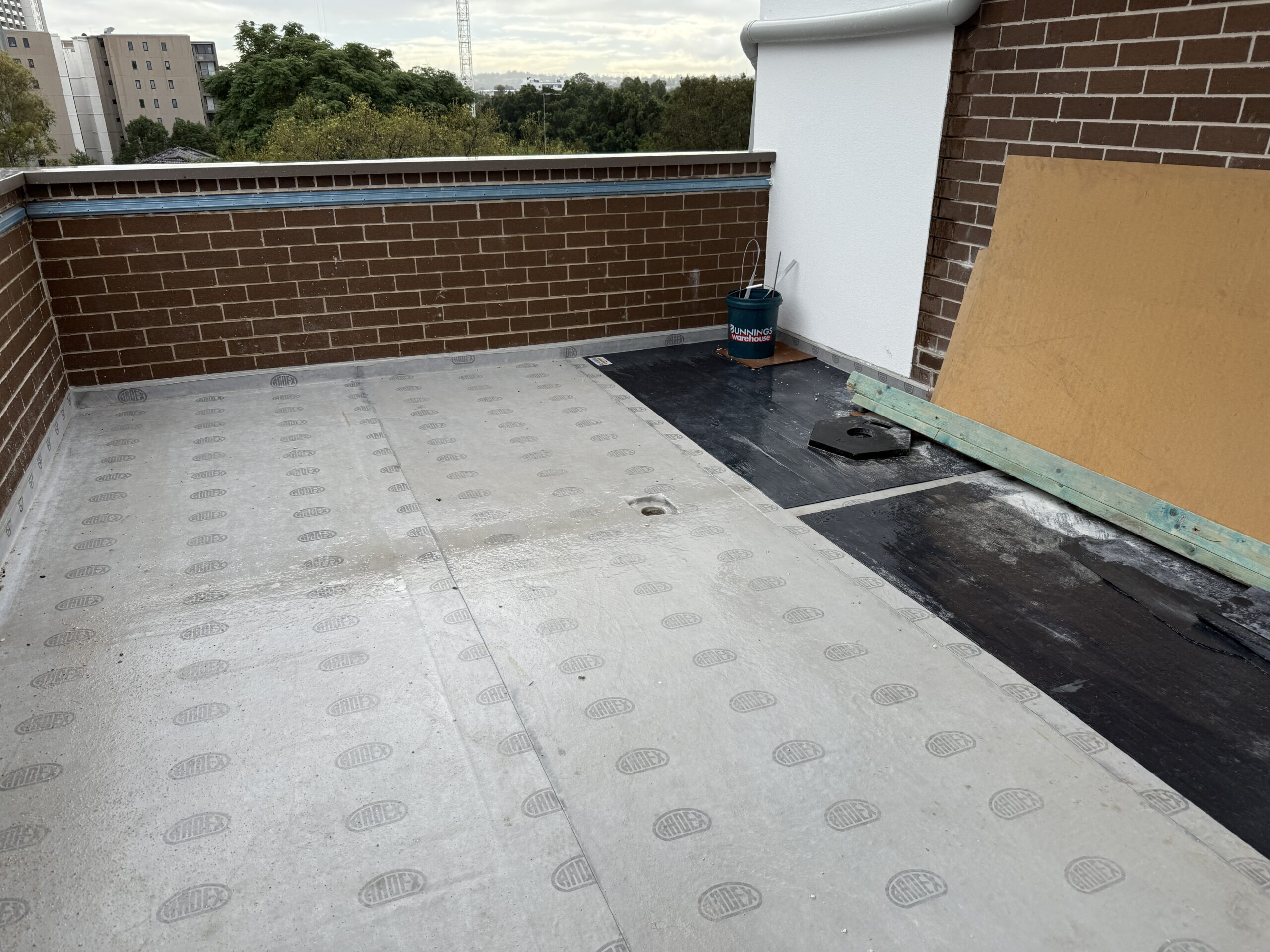
Liquid Membranes vs Sheet Membranes: Which is Best for Remedial Waterproofing?
What is a Liquid Waterproofing Membrane?
A liquid membrane applies as a fluid, usually with a roller, brush, or spray, and then cures to form a seamless, flexible waterproof barrier. Because the coating is continuous, it eliminates the weak points that often appear at joins.
Key Advantages:
Seamless coverage – Since there are no joins, the system reduces potential leak points.
Excellent for complex shapes – It easily wraps around penetrations, curves, and irregular surfaces.
Repair friendly – You can re-coat damaged areas without replacing the entire system.
Considerations:
Surface preparation is critical – Without proper prep, the membrane may not bond effectively.
Cure time – Weather and humidity can influence drying times and re-coat schedules.
Thickness control – Skilled application ensures even coverage and long-term performance.
What is a Sheet Waterproofing Membrane?
A sheet membrane comes in pre-manufactured rolls, often made from bitumen, PVC, TPO, or rubber. Installers lay these sheets and join them using heat welding, adhesives, or taped seams. As a result, the membrane delivers consistent thickness and durability from the moment it goes down.
Key Advantages:
Consistent thickness – Factory manufacturing guarantees uniform coverage.
Immediate performance – The membrane works as soon as it’s installed, with no curing delays.
High durability – Many sheet systems resist punctures and tears exceptionally well.
Considerations:
Seam vulnerability – Poorly sealed joins can still allow water entry.
Detailing challenges – Wrapping penetrations and corners often takes more time and precision.
Substrate tolerance – A smooth, even surface usually gives the best results.
Which is Better for Remedial Waterproofing?
Ultimately, the right choice depends on your project’s specific conditions. For example, liquid membranes excel in areas with complex detailing, while sheet membranes work well for large, open spaces. In many cases, a hybrid approach, combining sheet membranes for wide areas and liquid membranes for tricky junctions, offers the best of both worlds.
| Factor | Liquid Membrane | Sheet Membrane |
|---|---|---|
| Complex detailing | ✅ Excellent | ⚠️ More challenging |
| Seamless finish | ✅ Yes | ❌ No (requires joins) |
| Immediate readiness | ❌ Requires curing | ✅ Ready instantly |
| Thickness control | ⚠️ Skill-dependent | ✅ Factory-controlled |
| Repairs | ✅ Easy to patch | ⚠️ Often requires full section replacement |
Need To Know Which System Is Better For You?
Contact Elite Australian Engineering today for trusted advice and support.
No responses yet